
Synergy in the "Circle": Painting a "Smart" Future for Jilin
On February 8, 2025, General Secretary of the Communist Party of China Central Committee, President of the People's Republic of China, and Chairman of the Central Military Commission Xi Jinping pointed out when listening to the work report of the Jilin Provincial Party Committee and Provincial Government that it is necessary to coordinate regional development and advance the construction of the Changchun modern metropolitan area to form an integrated development pattern.
Premier of the State Council Li Qiang mentioned in this year's government work report that "we will implement the arrangements made at the Central Urban Work Conference, foster the development of modern metropolitan areas, strengthen urban planning, construction, and governance, and continue to implement urban renewal..."
During the open group activity of the Jilin Provincial Delegation to the Fourth Session of the 14th National People's Congress, Huang Qiang, the head of the delegation, Secretary of the Jilin Provincial Committee of the Communist Party of China, and Chairman of the Provincial People's Congress Standing Committee, clearly designated the high-standard advancement of the Changchun modern metropolitan area construction as the top priority for the "15th Five-Year Plan" period. This initiative serves as a strategic engine to shoulder the new mission of comprehensively revitalizing Jilin.
The Changchun modern metropolitan area is home to over half of the province's population and contributes nearly 70% of its economic aggregate. It acts as the core powerhouse driving the high-quality development of Jilin. The Provincial Party Committee and Government are promoting this at the highest level, establishing a leading group with dual leaders. This year, 718 key projects have been planned, aiming for the goals of "laying the foundation in one year, achieving tangible results in three years, and reaching a new level in five years." The effort is focused on building "four major circles," striving to surpass an economic output of 1.35 trillion yuan by 2030, and creating a new impetus for the comprehensive revitalization of Northeast China.
Transportation First: Weaving a Dense "Hard Connectivity" Framework for Urban Integration
Transportation is the top priority in metropolitan area construction.
Jilin is breaking down administrative barriers between cities through an integrated road network, promoting in-depth integration among the four cities of Changchun, Jilin, Siping, and Liaoyuan.
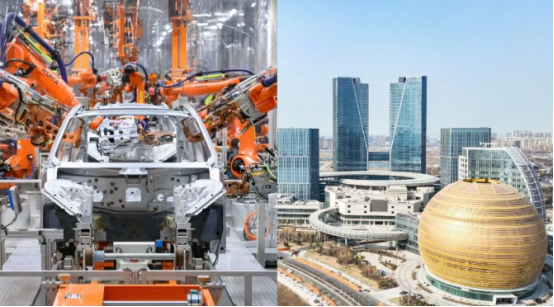
Currently, the Changchun Longjia International Airport's air-rail intermodal transportation hub is operating efficiently. Projects such as the western ring of the Changchun metropolitan area are accelerating, while preliminary work for the third-phase expansion of Longjia Airport and the Changchun-Siping-Liaoyuan high-speed railway has been fully initiated. The "metropolitan area on tracks" is taking shape rapidly, promising more convenient travel within the circle in the future.

Transportation interconnection not only shortens the spatial and temporal distances between cities but also enables the free flow of various development factors such as population, industries, and capital.
As the "one-hour commuting circle" gradually becomes a reality, resources related to culture, tourism, industry, and people's livelihoods within the circle are also being interconnected and shared at an accelerated pace. This lays a solid foundation for the four cities to pursue integrated development.
Industrial Collaboration: Forging a "Powerful Engine" for High-Quality Development
Industrial collaborative development is the core competitiveness of the metropolitan area.
Based on the respective strengths of each city within the circle, Jilin has established a development pattern of "core leadership and coordinated supporting industries":
Changchun focuses on research, development, innovation, and vehicle manufacturing. Jilin City strives to strengthen industries related to key materials such as carbon fiber. Siping delves deeply into the fields of auto parts and smart agricultural machinery, while Liaoyuan focuses on new energy supporting industries, forming a collaborative industrial chain development system.
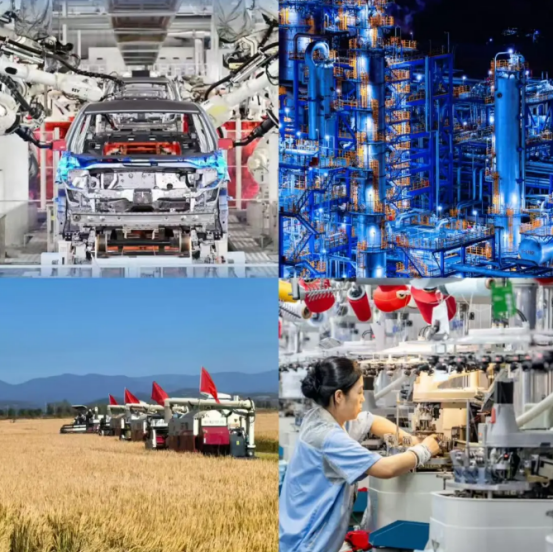
Leveraging its unique advantages in green power, ice and snow, carbon fiber, optoelectronics, and aerospace information, Jilin closely integrates the cultivation of new quality productive forces with metropolitan area construction.
By the end of 2025, the installed capacity of new energy and renewable energy sources in the province accounted for over 65% of the total. The production and sales volume of carbon fiber from Jilin Chemical Fiber Company surged to the top globally last year. The number of satellites in the "Jilin-1" constellation has increased to 144. New development tracks such as green hydrogen, ammonia, and methanol, embodied intelligence, and the silver economy are also emerging rapidly.
The coordinated planning and integrated development of these advantageous industries are driving Jilin's industrial landscape to shift from "individual breakthroughs" to "clustered growth," providing strong support for Jilin's progress and breakthroughs during the "15th Five-Year Plan" period.
Shared Livelihood Benefits: Ensuring Development Outcomes Reach the People
The ultimate goal of metropolitan area construction is to enable the people to share in the dividends of development.
Jilin has always adhered to a people-centered approach, accelerating theurban integration construction of the metropolitan area, enabling people in the four cities of Changchun, Jilin, Siping, and Liaoyuan to handle affairs without discrimination and enjoy services to the same standards, truly achieving "a sense of kinship within the same city."

Currently, 208 government service items in the metropolitan area have achieved "inter-circle accessibility," and 270 medical examination and test results are mutually recognized, eliminating the need for people to travel across cities for errands or undergo duplicate examinations.
The four cities have jointly established a cloud-based school network, offering over 7,000 high-quality courses, enabling children to share excellent educational resources.
A series of people-centric initiatives, such as joint ice-snow tourism passes, dedicated cultural tourism routes, and cross-city healthcare and wellness programs, have been successively implemented, truly achieving "shared urban living and shared well-being."
Planning-Led: Forging Ahead with Practical Actions
Secretary Huang Qiang emphasized at the open group activity that Jilin adheres to the principle of "insisting on compiling plans independently, compiling genuine plans, and genuinely implementing the compiled plans."
Leading officials at the provincial, city, and county levels have gone deep into the grassroots, learning from the people to understand their most pressing difficulties and concerns.
The province's four leading groups have held seven special meetings, extensively soliciting opinions from the public to ensure that the planning blueprint not only aligns with the spirit of the central authorities but also is grounded in Jilin's actual conditions and meets the expectations of the people.
Officials across the province have taken the initiative to shoulder responsibilities and act as "construction team leaders," sparing no effort to transform the planning drawings into tangible and visible real-life scenes, ensuring development effectiveness through scientific planning.
Source: Jilin Release Editor: Liu Jiadi


