
FAW Develops China's First "Power-Generating Sunroof"
Recently, China FAW Group (hereinafter referred to as FAW Group) announced that it has successfully built a perovskite photovoltaic sunroof prototype. This is the first integration of perovskite photovoltaic technology into automotive safety glass both in China and abroad, marking a new stage where vehicle-integrated photovoltaics advance from concept verification to a physical prototype.
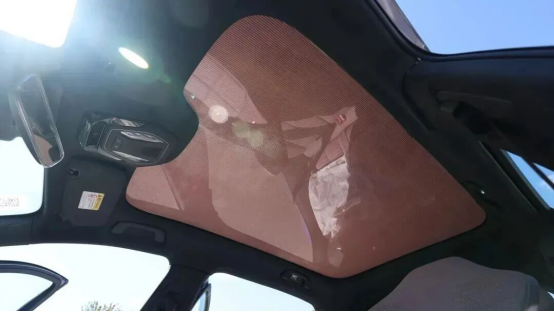
Perovskite materials are lightweight, thin, flexible, and color-tunable, with high photoelectric conversion efficiency and the potential for cost reduction. These advantages make them better suited to curved surfaces on vehicles than photovoltaic panels with traditional crystalline silicon, positioning perovskite as a key technology direction for next-generation vehicle-integrated photovoltaics. While the automotive industry is still exploring crystalline silicon photovoltaics for vehicles, FAW Group has taken the lead in the third-generation perovskite technology.
Perovskite materials are vulnerable to water, oxygen and ultraviolet radiation. In automotive applications, this poses significant challenges to their encapsulation and curved surface lamination, a field still largely unexplored in the industry. Together with research institutes and partners across the industrial chain, FAW Group has overcome two core technical challenges of curved surface lamination and highly reliable encapsulation, securing a technological breakthrough in full-size perovskite photovoltaic sunroofs.
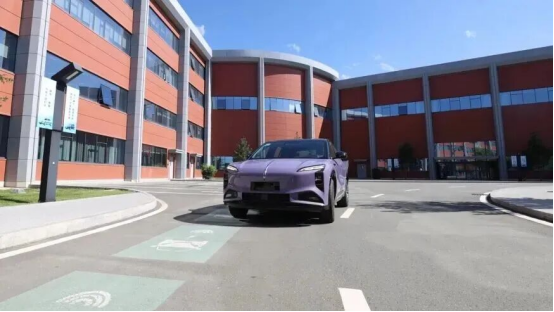
Tests show that under sufficient sunlight, the sunroof can generate nearly 300 W of electricity in real time and produce approximately 400 kWh of clean electricity annually, which is enough to power low-voltage in-vehicle equipment such as parking air conditioning, car refrigerators and sentry mode. According to technical estimates, if photovoltaic panels were installed across multiple body parts of the vehicle to achieve full coverage, the vehicle could generate up to 10 kWh of electricity per day, extending its driving range by approximately 80 kilometers. This would cover most users' daily commutes and could cut their electricity costs for commuting to zero.
FAW Group has achieved a zero-to-one breakthrough in perovskite-based vehicle-integrated photovoltaics, opening up a new pathway that uses solar energy to power new energy vehicles, alleviates range anxiety, and enables vehicles to generate clean energy.
Source: Jilin Release Editor: Liu Jiadi