
Changchun Inland Port Hub: The "Logistics Artery" of the Modern Metropolitan Area
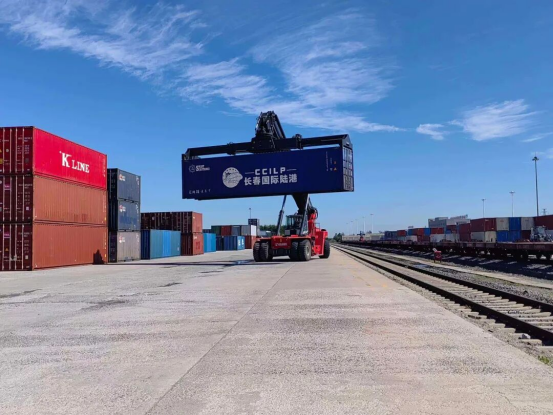
Freight trains of the China Railway Express roar westward, sea-rail intermodal trains head for ports around the Bohai Rim, and containers loaded with auto parts and daily necessities circulate in an orderly manner at Changchun Xinglong Railway Port. The bustling logistics and transportation operations paint a vivid picture of the booming development of the logistics industry in Changchun Modern Metropolitan Area. As a key platform for implementing China's strategy of opening up to the north, the Changchun Inland Port-type National Logistics Hub, with its exclusive port qualifications, innovative intermodal transport models and three-dimensional corridor network, has broken the barriers to internal and external connectivity, providing strong support for the high-quality economic development of Changchun and the broader Northeast region.
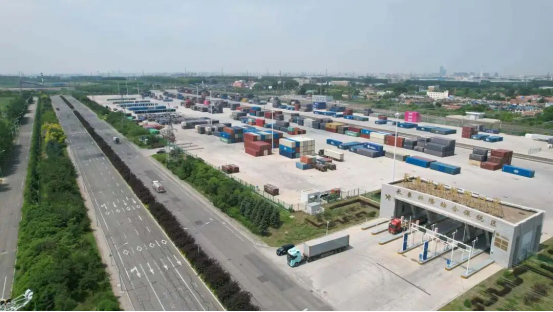
Located deep in the hinterland of Northeast China, Changchun is neither a border city nor a coastal city. How to break through geographical limitations and shore up weak links in logistics has long been a critical challenge for the region's open development.
In July 2015, Changchun International Inland Port Development Co., Ltd. was officially registered and established. A professional team, with the vision of connecting Europe and Asia and revitalizing logistics in Northeast China, quickly devoted itself to the preparation of port operations and freight train services. On August 31 of the same year, Jilin Province's first China Railway Express route, "Changchun-Manchuria-Europe," achieved two-way connectivity, marking the beginning of a new era in Changchun's international logistics development.
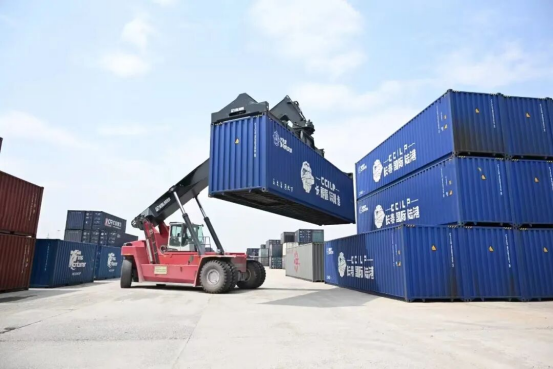
Leveraging years of sustained operational expertise, Changchun successfully secured its designation as a national inland port-type logistics hub in 2022. The Changchun Inland Port Hub comprises two functional zones, Xinglong and Beihu, covering a total area of 5.59 square kilometers, with a core railway port area of 0.73 square kilometers. Its clearly defined functional divisions and well-structured operational framework have laid a solid foundation for sustainable overall development.
The highly valuable international port code (CNCCD) designation has effectively granted this inland city an "identity card" for international trade, placing Changchun among the few inland railway ports nationwide with such accreditation, and completely removing the key bottleneck that once hindered its integration into the global shipping network.
Armed with core port credentials, the Changchun Inland Port Hub has seized the moment to address intermodal transport pain points through innovative models, making logistics flows more efficient and business operations more cost-effective for enterprises. In the past, imports and exports from the Northeast hinterland required multiple bill exchanges and repeated transshipments, entailing cumbersome procedures and high costs. In response, the Changchun Inland Port Hub took the lead in the Northeast region by introducing a "single-document" system for sea-rail intermodal transport. Capitalizing on the unique advantage of "integrated port-zone operations" through the co-location of the railway port and the Changchun Xinglong Comprehensive Bonded Zone, it has achieved "direct delivery of warehouse receipts and direct signing of bills of lading." Upon arrival at the port, cargo ownership can be immediately transferred, greatly streamlining transport processes, increasing transport efficiency by over 30%, and significantly reducing supply chain costs.
To date, Changchun has established partnerships with 13 major shipping companies, including COSCO Shipping and Maersk, setting up local container depots for empty return. Sea-rail intermodal services now operate regularly to and from Bohai Rim ports such as Dalian, Yingkou, and Tianjin, with collection and distribution times reduced to as little as 17 hours, steadily advancing toward the goal of "daily departures." This has realized the model of "goods entering the zone are equivalent to entering the port, and the two ports operate as one", allowing enterprises in Jilin Province to enjoy one-stop international logistics services without leaving the province.
Beyond sea-rail intermodal transport, the Changchun Inland Port Hub has developed a four-in-one multimodal transport network integrating road, air, rail, and sea, creating a multidimensional logistics corridor that radiates across China and connects to Europe and Asia.
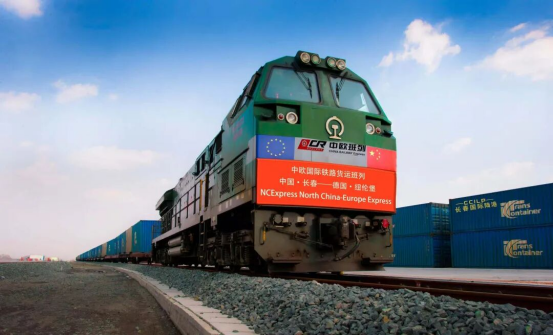
On the international rail front, three China Railway Express routes, namely "Changchun-Manchuria-Europe," "Changchun-Huichun-Europe," and "Changchun-Hamburg", operate in parallel, positioning the hub as a key node on the eastern route of the China Railway Express and a gateway platform for opening up in Northeast China. Over the past 9 years, a total of 75,000 TEUs of China Railway Express services have been dispatched, accounting for a quarter of the total carrying volume of the eastern corridor of China Railway Express nationwide. More than 60% of the cargo sources are from Jilin Province, which reliably meets the import and export demands of leading enterprises such as FAW Group, Fuyao Glass and Kumho Tire.
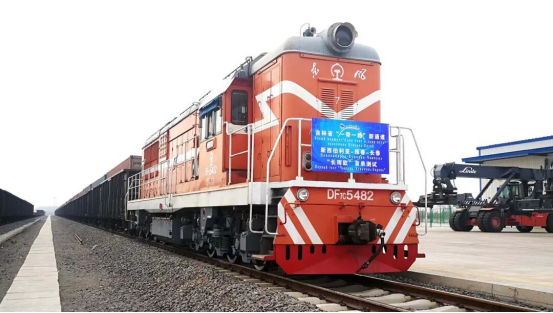
In the realm of air-road intermodal transport, "truck flights" connect Changchun to major domestic aviation hubs including Beijing, Shanghai, and Zhengzhou, establishing fast air-road intermodal international corridors. The deep coordination across road, rail, sea, and air modes has transformed Changchun from an inland city into a multimodal transport hub for Northeast Asia.
A thriving hub gives rise to thriving logistics, and smooth logistics in turn energize the economy. The robust development of the Changchun Inland Port-type National Logistics Hub continues to unleash far-reaching radiation and spillover effects, deeply empowering the development of the Changchun Modern Metropolitan Area. At the regional coordination level in particular, the hub has given full play to Changchun's role as the "primary core," attracting Jilin's chemical industry, Siping's auto parts sector, Liaoyuan's hosiery industry, and other distinctive local industries to converge around the center. It has also facilitated the deep processing of indigenous resources such as Songyuan corn oil and Baishan diatomaceous earth, extending industrial chains and raising product value-added, thereby helping Jilin transition from a raw-material exporter to a brand-oriented producer.
From an inland hinterland to the forefront of opening-up, and from a single-function railway port to a comprehensive national logistics hub, the Changchun Inland Port-type National Logistics Hub takes the corridor network as the backbone and innovation as the engine, continuously smoothing the domestic and international dual circulation. In the future, this vibrant inland port hub will continue to shoulder important responsibilities, expand the hub economy, optimize the intermodal transport system, and expand opening-up platforms, continuously injecting strong impetus into the quality improvement and upgrading of Changchun Modern Metropolitan Area.
Source: Jilin Daily Editor: Liu Jiadi