
The 3rd CCIOE Drives Changchun’s Internationalization Forward
The 3rd CCIOE · Light Conference and the Chinese Optical Society Changchun Academic Conference concluded successfully. The expo attracted a total of 890 enterprises from home and abroad, showcased over 4,000 optoelectronic products, and brought together experts and scholars from 23 countries, witnessing a total of 69 projects signed with a combined investment of 20.546 billion yuan. All of these figures attest to the event's strong industrial influence and development momentum. Beyond the numbers, a more profound transformation is underway.
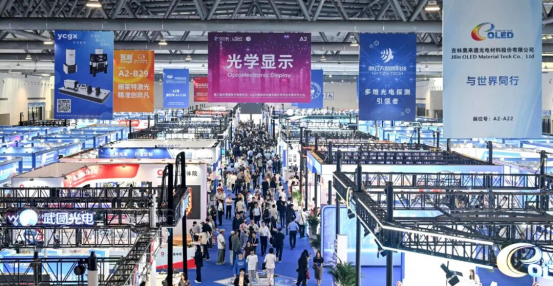
Leveraging the expo as a platform, Changchun is planning its industrial layout with a global vision and building a comprehensive, multi-faceted system for global connectivity, aiming to strengthen collaboration across the optoelectronics industry and supply chains.
The leapfrog advancement in internationalization stands out as the defining feature of this year's expo — and the clearest signal yet that Changchun, "the cradle of New China's optical industry," is opening its doors to the world.
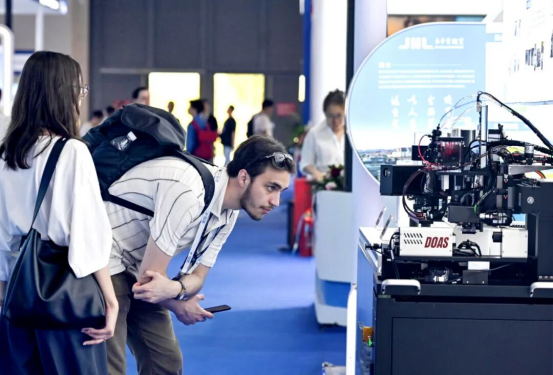
"I didn't expect the conference to be on such a scale, bringing together top talents and cutting-edge products in optics. Changchun's optoelectronics industry has already become highly internationalized and is well-known not only in China but around the world," said Konstantin Novoselov, Nobel Laureate, Foreign Academician of the Chinese Academy of Sciences, and Professor at the National University of Singapore. His sentiment was widely echoed by international participants.
This edition of the expo demonstrated a strong commitment to opening-up, with 42 foreign-funded enterprises participating, a year-on-year increase of 55%. Optoelectronics companies and industry delegates from Singapore, Brazil, and other countries along the Belt and Road Initiative, as well as multiple European nations, attended the event.
The 3rd CCIOE Drives Changchun’s Internationalization Forward

The 2026 Light International Conference brought together over 800 academic elites from 23 countries, including one Nobel laureate and 20 Chinese and foreign academicians, all gathering in this "Spring City of the North." This has significantly enhanced Changchun's international academic influence in the field of optics.
The Chinese Optical Society Changchun Academic Conference focused on critical areas such as ultra-precision optics and core optoelectronic equipment, concentrating efforts on addressing key industrial shortcomings and "bottleneck" technologies that constrain development.
The 2026 Atomic-level Manufacturing Innovation and Development Conference pioneered an integrated model combining "conferences, exhibitions, and competitions," accelerating the translation of cutting-edge technological achievements into practical applications and providing a high-quality platform for international technological cooperation.
Meanwhile, multiple cross-border industry-academia-research collaborations have come to fruition. Professor Paul Urbach, President of the Light International Conference, and Professor Costantino De Angelis, Vice Rector of the University of Brescia, Italy, have successfully signed agreements under the Chinese Academy of Sciences' International Exchange Program. The Polish delegation signed a cooperation agreement with Changchun University of Science and Technology, established a long-term cooperative mechanism with the Changchun Institute of Optics, Fine Mechanics and Physics (CIOMP) of the Chinese Academy of Sciences, and will co-host bilateral forums.
Ranging from academic exchanges and project signings to preliminary negotiations and institutionalized cooperation, Changchun is accelerating its transformation into a key hub for global optoelectronics industry exchange and collaboration. The city's local optoelectronics industry is now fully and deeply integrated into the global network of innovation and partnership.
Chang Guang Satellite's "Jilin-1" constellation has reached 153 satellites in orbit, forming the world's largest sub-meter commercial remote sensing satellite constellation. Chang Guang Huada's high-throughput gene sequencer has achieved the highest throughput level globally. Yuheng Optics' high-precision grating rulers are now being mass-produced to replace imported counterparts. Changchun has built a complete optoelectronics industry system spanning basic research, core materials, precision manufacturing, and application scenarios. In 2025, the city's optoelectronics information industry reached an overall scale of nearly 100 billion yuan.
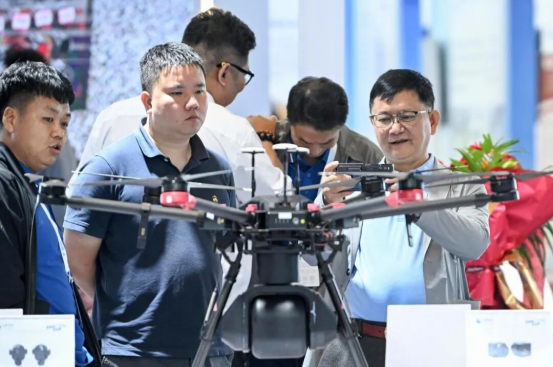
This year, our province has designated the optoelectronics information industry as the "No. 1 Project," and China Optics City has been positioned as the "core" of Changchun's modern metropolitan area. It serves as the primary driver for cultivating new quality productive forces and advancing the province's comprehensive revitalization.
During the expo, the "Development Plan for China Optics City" was officially released. Under the 15th Five-Year Plan period (2026–2030), efforts will be accelerated to build a world-class optoelectronics information industry highland.
The sustained release of policy dividends, clearly defined development pathways, and a continuously improving industrial ecosystem provide a solid foundation for Changchun to deepen international cooperation and attract high-quality global resources.
From its origins as "the cradle of New China's optical industry" to its current role as a thriving hub for building a world-class optoelectronics information industry highland, Changchun leverages the CCIOE as a bridge to continuously amplify its international development advantages and elevate the level and standard of its opening-up. In doing so, the city is writing a new chapter of high-quality international engagement on the global optoelectronics industry map.
Source: Changchun Daily Convergence Media Editor: Liu Jiadi