
A Pivotal Moment for Changchun's Breakthrough in Revitalization: Defining Changchun's Position in the Decisive Year
The year 2025 marks the concluding year of China's 14th Five-Year Plan. Changchun is coordinating the transformation of traditional industries, the expansion of competitive industries, and the cultivation of new quality productive forces, with a focus on building a modern industrial system defined by the "transformation of three traditional robust industries, advancement of four strategic emerging industries, and deployment of seven future industries". In particular, since the midterm of the 14th Five-Year Plan, the city has implemented a three-year campaign for comprehensive revitalization, driving profound and positive changes in its development momentum and status on the whole. All this has charted a clear pathway for Changchun's development on a new journey.
Core Mission: From "One City" to "One Circle"
Viewed on the map, Changchun lies in the heart of northeast China. With Changchun as the center, nearly 70% of Jilin Province's population and more than 70% of its total economic output are concentrated within a 200-kilometer radius, where an economic circle with immense potential naturally comes into being.
Building on this advantage, Jilin Province has established the "1351" spatial layout—featuring "one center, three clusters, five belts, and one corridor"—and is endeavoring to advance the development of the Changchun Modern Metropolitan Area. Under this framework, Changchun, Jilin, Siping, and Liaoyuan are encouraged to leverage their respective strengths and complement one another.
Anchored at the strategic position of the geometric center of Northeast Asia, Changchun has proactively assumed the role of a "primary engine", taking the construction of the modern metropolitan area as its main battleground while actively serving and integrating into national strategies and broader regional coordinated development.
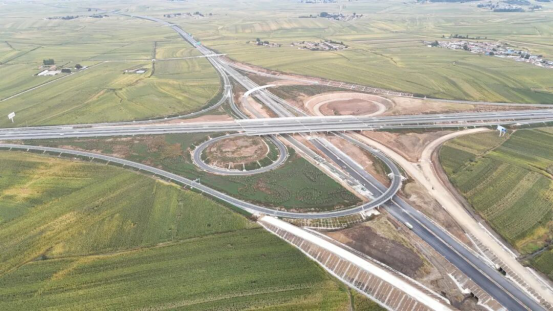
In the depths of winter, construction of the western ring expressway of the Changchun Metropolitan Area continues at full pace. The project covers a total length of 143.341 kilometers. All 8,831 prefabricated girders required for the entire route have been completed, laying a solid foundation for full opening to traffic.
In the northeastern part of Changchun, construction of the Changchun-Yushu Expressway is also in full swing. The route has a total length of 140 kilometers and is expected to open to traffic in 2026. Passing through Jiutai District and Dehui City before reaching Yushu City, it will significantly promote the integration of county-level areas into the development of main urban areas and forge a second expressway corridor between Changchun and Harbin, thereby providing vital transport support for the construction of the Changchun Modern Metropolitan Area and the high-quality growth of the Harbin-Changchun urban cluster.
Once the western ring project is connected with the eastern ring expressway, the two will together constitute an expressway ring around the Changchun Metropolitan Area, advancing the city's expressway network toward a "two rings and nine radials" structure. The total mileage will approach 1,200 kilometers, nearly double that at the beginning of the 14th Five-Year Plan period. This is expected to facilitate direct expressway connectivity between surrounding counties (cities and districts) and the urban core and markedly ramp up the efficiency and accessibility of the road network.
Linking east and west, connecting south and north, Changchun is benefiting from an increasingly sound multi-dimensional transport network encompassing aviation, high-speed rail, and expressways. The flow of factors between Changchun and neighboring cities is becoming more efficient, industrial collaboration is growing closer, and the city's role as a key logistics hub in Northeast Asia is becoming increasingly prominent.
Looking ahead, Changchun will foster a modern industrial system centering on such areas as new energy, new equipment, new materials, and new pharmaceuticals. It will work to build major industrial clusters—including an automobile city, an optoelectronics city, and a pharmaceutical city—while stepping up the development of emerging sectors such as the low-altitude economy, satellite manufacturing and applications, next-generation semiconductors, and embodied intelligence. By extending industrial chains toward surrounding cities, Changchun aims to jointly sharpen the competitiveness of the metropolitan area on the whole.
Development Priorities: Moving Toward the New and the Smart to Achieve Breakthroughs in Industrial Upgrading
In the Hongqi Fanrong Factory of FAW Group in Changchun, industrial robotic arms lift and pivot, automated guided vehicles shuttle across the floor, and streams of data flicker across intelligent control screens. Through the collaboration of automated machinery and skilled human labor, a new energy vehicle rolls off the production line every 52 seconds at peak efficiency, fully showcasing the hard-core strength of "Intelligent Manufacturing in China".
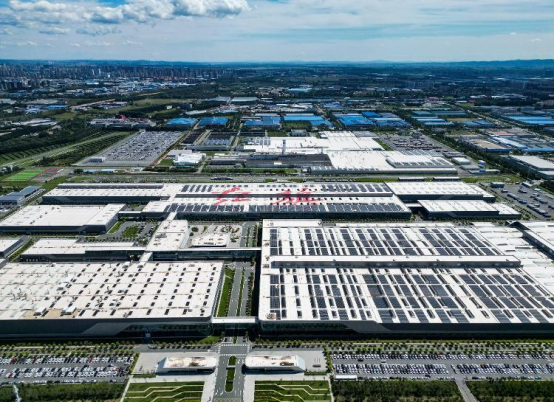
In the first three quarters of 2025, the city's automobile industry generated an output value of RMB 329.93 billion. If the traditional auto sector is the "ballast stone" of Changchun's industrial economy, then emerging industries—represented by the "Jilin-1" satellite constellation—are the "new engines" driving the city's future.
On December 10, 2025, with the successful launch of three additional "Jilin-1" satellites, the constellation expanded to 144 satellites in orbit. To date, the "Jilin-1" satellite project has established the world's largest sub-meter-resolution commercial remote-sensing satellite constellation, enabling rapid revisit of any location worldwide and supporting nationwide sub-meter imagery updates on a bimonthly basis.
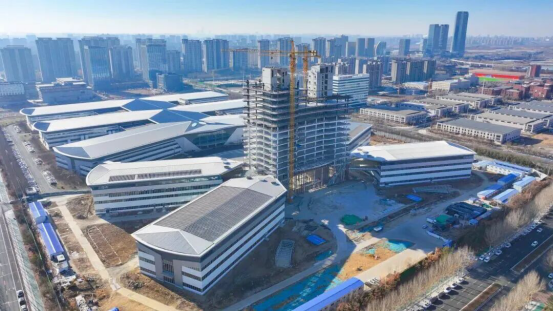
At the same time, construction of Phase II of the Chang Guang Satellite Aerospace Information Industrial Park is progressing smoothly. Four podium buildings planned under the project have largely been put in place, while the steel structure of the main tower's core has risen to the 18th floor above ground. Spanning a land area of 80,000 square meters with a total planned floor area of 135,000 square meters, the project involves a total investment of RMB 4.5 billion. It will house facilities including a satellite command and control center, a data processing center, a data storage center, an optical processing center, and other auxiliary facilities. Once put into operation, the park is expected to generate an annual output value of RMB 2 billion, making it an important base for the development of the aerospace information industry.
Strategic emerging industries such as high-end equipment manufacturing, optoelectronic information, and biomedicine are advancing on multiple fronts. Together, they are injecting strong momentum into Changchun's industrial transformation and upgrading, while precisely addressing—through clustered breakthroughs—the structural challenges of an industry mix weighted toward traditional sectors yet falling short of new growth drivers.
According to data, in the first three quarters of 2025, the city's electronic industry achieved an output value of RMB 23.5 billion, up 3.8% year on year, while the scale of the optoelectronic information industry surpassed RMB 100 billion for the full year. Over the same period, the biopharmaceutical industry recorded a year-on-year growth rate of 15.8%, offsetting structural weaknesses arising from slower growth in traditional industries. Additionally, in the first three quarters of 2025, the city's industrial investment increased by 1.2% year-on-year, 10.6 percentage points higher than the overall investment growth rate. It accounted for 23.2% of the city's total investment, further solidifying its role as a "ballast stone" for the economy.
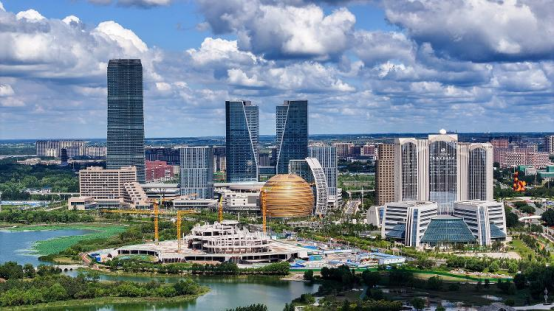
In 2025, Changchun launched 1,412 projects each with investment exceeding RMB 50 million. This has not only strengthened the industrial "physique" and enhanced its "character", but also significantly bolstered its asset base. This solid foundation provides both the bedrock and the confidence for the city to pursue even higher goals.
The automotive sector, the cornerstone of Changchun's economy, stands as the key battleground for driving transformation and breakthroughs in the manufacturing sector. Changchun is fostering a diversified portfolio of leading industries while strengthening its core automobile sector, promoting strategic emerging industries such as high-end equipment manufacturing, optoelectronic information, biomedicine, and life health, and accelerating their transformation into the strongest "engine" driving industrial growth.
Foundation of Growth: Driving Agriculture from Scale to Efficiency
In the golden autumn, a bumper crop of grain is harvested. Located in the "Golden Corn Belt" and "Golden Rice Belt" of the world, Changchun embraces the joy of autumn harvest. As one of China's important commodity grain bases, Changchun, the major granary on the black earth, is accelerating the construction of a national demonstration zone for modernized agriculture.
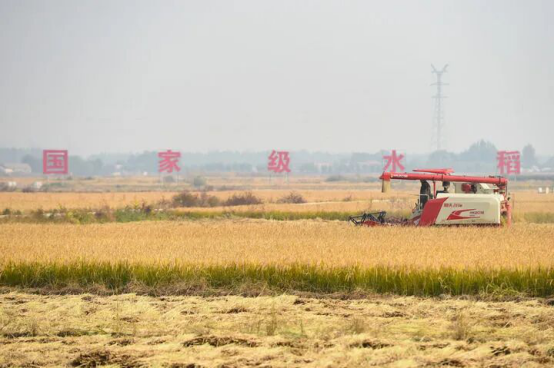
Along the Yinma River in Longjia Subdistrict, Jiutai District, the golden waves of rice undulate with the wind. Straight ditches, orderly fields, and unobstructed roads sketch a brand-new portrait of modernized agriculture.
Through large-scale development of high-standard farmland, the area now features grid-like fields, interconnected roads and canals, a well-connected network of trees, and reliable irrigation and drainage systems, ensuring a reliable water supply during droughts and effective drainage during floods. This has driven the transformation of rice production toward larger scale, greater standardization, and higher efficiency.
Currently, the village has large rice fields covering over ten mu (1 mu=0.0667 hectares), along with smaller plots of about five or six mu each. By breaking up the furrows and making them contiguous, the planting area increased by 18 mu all at once. Thanks to the development of high-standard farmland, the village saw a 10% increase in grain production, a 2% improvement in fertilizer efficiency, a 7% rise in irrigation coverage, and achieved 98% mechanization in field operations.
This image clearly shows how Changchun is advancing high-quality farmland development and sustainable farming practices—shifting agriculture from simply being large in scale to being strong in efficiency.
A set of data has confirmed the "solid foundation" of agriculture in Changchun: The city has established a total reserve of cultivated land at 26.79 million mu and a protection task for permanent basic farmland at 22.15 million mu, increasing by 1.69 million mu and 560,000 mu respectively, compared to the "13th Five-Year Plan" period.
The steady growth in grain output is driven by a systematic approach–protecting farmland and enhancing its quality while advancing agricultural innovation. In 2025, the city's total grain output reached 26.58 billion jin (1 jin = 0.5 kg). All six counties and county-level cities under Changchun's administration are ranked among China's top 100 counties for grain production. Among them, Yushu, Nong'an, and Gongzhuling consistently ranked within the top five nationwide, solidifying Changchun's pivotal role as a national commodity grain production base.
Changchun launched the "Black Soil Granary" campaign in depth and took measures to maintain the area of sustainable farming above 12 million mu, with the quality grade of farmland ranking first in the province. Changchun has developed a total of 13.91 million mu of high-standard farmland, transforming nearly 60% of its permanent basic farmland into modern, resilient fields that are "irrigable in drought and drainable in flood”. With the overall agricultural mechanization rate reaching 96%, the city has been recognized as a "National Demonstration City for Full-Process Mechanization of Major Crops".
In this decisive year, Changchun is building new strengths through technological innovation, consolidating its development foundation through industrial upgrading, and safeguarding its security baseline with modernized agriculture. On the new journey toward comprehensive revitalization, the city is striving to compose an even more remarkable chapter.
Source: Xinhuanet Editor: Liu Jiadi


