
USD 1.365 Billion! GenSci's Innovative Drug Goes Global, Spotlighting Changchun's High-Tech Biopharma Sector
Recently, Changchun's biopharmaceutical sector has scored a major win: a groundbreaking drug developed by GenSci is heading overseas. Changchun GeneScience Pharmaceutical Co., Ltd. (GenSci), a subsidiary of Changchun High-Tech Industry (Group) Inc., announced that its wholly-owned subsidiary, Shanghai Saizeng Medical Technology Co., Ltd., has signed an exclusive licensing agreement with U.S.-based Yarrow Bioscience, Inc. The deal grants Yarrow Bioscience the global rights (excluding Greater China) to GenSci098 (YB-101), a self-developed humanized thyroid-stimulating hormone receptor (TSHR) antagonistic monoclonal antibody.
Targeted Drug Breakthrough Opens the Gate to Global Markets
GenSci098 is GenSci's independently developed Class 1 biological drug for therapy – a humanized monoclonal antibody targeting TSHR. As the world's first drug against this target to enter clinical trials, its "best-in-class" potential lies in comprehensive innovation spanning mechanism of action to patient experience. By specifically binding to the receptor to block abnormal signaling, it enables disease-modifying therapy for Graves' disease and Thyroid Eye Disease, overcoming limitations of traditional treatments such as long duration, high relapse rates, and significant side effects. It can thus offer patients worldwide a potential cure.
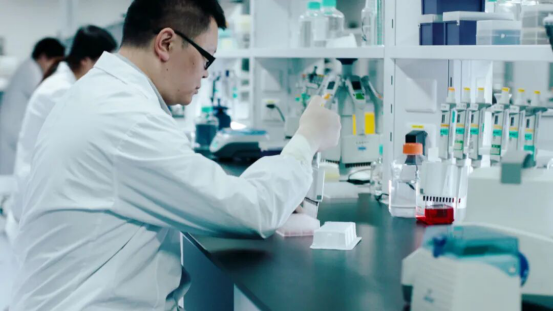
The drug's clinical value translates directly into tangible partnership returns and international recognition. Under the agreement, Saizeng Medical will receive a USD 120 million upfront payment and near-term development milestone payments. Based on GenSci098's progress in clinical development, registration, and commercialization, Saizeng is eligible for up to USD 1.365 billion in milestone payments, plus sales commissions exceeding 10% of net sales post-launch. Currently, clinical trials for Thyroid Eye Disease have been approved in both China and the U.S., while the Graves' disease indication also obtained clinical trial approval from China's National Medical Products Administration in October 2025.
Decades of Innovation Fuels Transformation and Growth
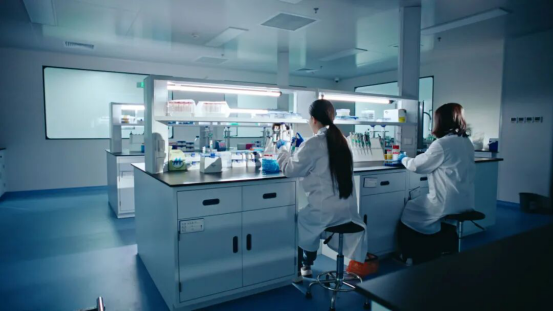
The USD 1.365 billion milestone caps nearly 30 years of relentless innovation at GenSci. "The company is transitioning from a singular focus on growth hormone to a new phase driven by a 'troika' – growth hormone, innovative drugs, and R&D BD revenue," said Dr. Jin Lei, General Manager of Changchun High-Tech Industry (Group) Inc., and Founder, General Manager, and Chief Scientist of GenSci. He described the overseas licensing deal as a substantive breakthrough in the company's strategic transformation.
GenSci has increased its R&D investment for 12 consecutive years, with R&D expenses accounting for 22% of sales revenue in 2024. This sustained commitment has enabled the company to build an innovative pipeline matrix across endocrinology/metabolism, immunology/respiratory, oncology, and other therapeutic areas, with several clinical-stage candidates showing "best-in-class or first-in-class" potential.
"Changchun has prioritized the pharmaceutical industry as a strategic emerging sector, rolling out targeted policies for precise support. The city also benefits from unique resources, a concentration of leading enterprises, and a deep pool of professional talent. All these efforts have laid a solid foundation for high-quality growth of this industry," said Li Xiufeng, Director and Executive Vice President of Changchun High-Tech Industry (Group) Co., Ltd., and a member of GenSci's Executive Management Team. The company will continue to center its strategy on R&D innovation and internationalization, actively engaging in global competition to demonstrate its robust and sustained growth.
Industrial Clusters Drive a Biopharmaceutical Boom
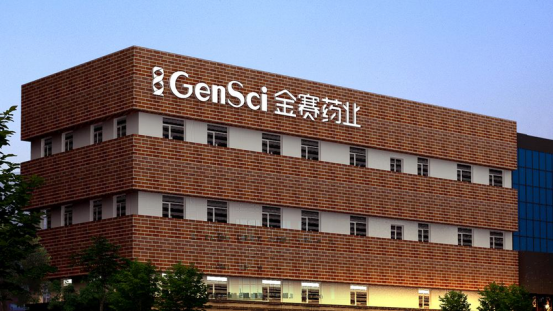
The major breakthrough achieved by GenSci vividly epitomizes the high-quality development of Changchun's biopharmaceutical industry. Changchun, designated as one of China's first three national biological industry bases by the NDRC in 2005, holds the distinction of pioneering several foundational "firsts" in the nation's biopharmaceutical history, including the development of the country's first interferon and first genetically engineered hepatitis B vaccine. Today, the city has developed into an important production base for vaccines and genetically engineered drugs in China.
Changchun's biopharmaceutical sector is currently in a golden age of rapid development. In 2024, Changchun's pharmaceutical industry generated an output value of RMB 31.8 billion, accounting for 43.3% of the province's total, bringing the total output value of the city's broader healthcare sector to RMB 110 billion. From January to November 2025, Changchun's pharmaceutical industry registered an output value of RMB 34.15 billion, marking a year-on-year increase of 16.1%. It is expected that the annual output value of this industry will exceed RMB 36 billion, pushing the city's pharmaceutical and healthcare industry past the 120-billion-yuan mark.
"The licensing deal worth USD 1.365 billion serves as a testament to the effectiveness of Changchun's industrial ecosystem cultivation," stated a relevant official from the Changchun Municipal Bureau of Industry and Information Technology. The city has established a full-chain service system that spans from R&D funding and achievement commercialization to talent recruitment and platform building. This overseas licensing of the innovative drug will further attract international resources to gather in Changchun, injecting vitality into industrial upgrading and talent attraction.
Changchun tackles development challenges bravely with innovation and embraces the global market with openness. For GenSci, this cross-border collaboration represents a leap from "local innovation" to "global sharing"; for Changchun, it marks a new starting point for industrial cluster upgrading; and for China's innovative drug sector, it stands as a successful validation of the "independent R&D, global licensing" development pathway.
Source: Changchun Daily Editor: Liu Jiadi


