From the Changchun Auto Expo, Understanding an Automotive City's Path of Renewal
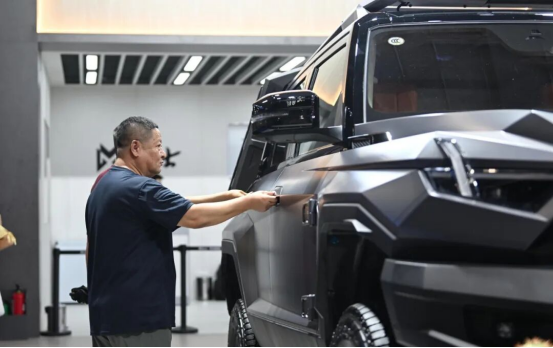
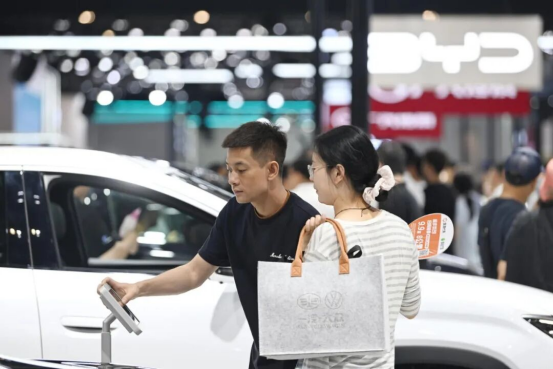
On July 11, the 23rd Changchun International Automobile Expo officially opened. Inside the halls, 53 automakers showcased over 1,000 vehicles, with more than 20 new models making their Northeast China debut. Outside the halls, the eyes of the domestic and international industry once again turned to this Automotive City.
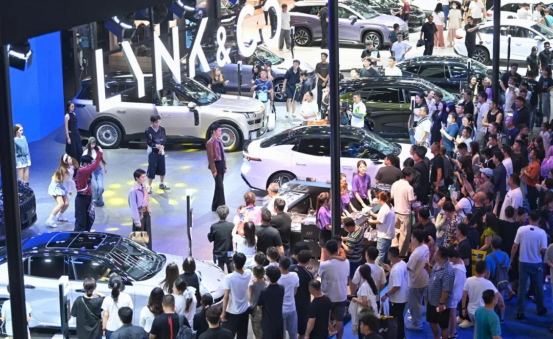
After more than two decades, the value of the expo is no longer measured simply by the number of participating brands or vehicles on display. As the automotive industry undergoes a sweeping transformation toward electrification, intelligence, connectivity, and shared mobility, a critical question emerges: At this pivotal moment of industrial transition, what keeps Changchun firmly in the driver's seat of China's automotive landscape? This is the key question behind this year's expo.
Deepening the Industrial Foundation, Building a Stronger Automotive Heartland
Rewind to July 15, 1953, when the First Automotive Works (FAW) broke ground in Changchun, marking the birth of New China's automotive industry. On July 13, 1956, the first Jiefang-brand truck rolled off the assembly line, ending China's inability to produce its own automobiles. Over the past 73 years, FAW and Changchun have grown in lockstep, evolving from a single truck manufacturing base into a world-class automotive group spanning all vehicle categories and multiple brands.
Today, Changchun is home to six complete-vehicle plants—FAW Hongqi, FAW Bestune, FAW Jiefang, FAW-Volkswagen, FAW Toyota, and Audi FAW. It hosts over 1,000 automotive parts suppliers above designated size, forming a 30-kilometer efficient supply network. The total output value of the automotive industry consistently accounts for more than half of the city's industrial output. The "Changchun Automotive Cluster" has been recognized as a national-level advanced manufacturing cluster and remains China's only comprehensive automotive cluster based in a single city.
Leveraging the Changchun metropolitan area, the four cities in the region have aligned industrial technology standards, co-developed and shared supply chains, and collaborated on core technology R&D. This has steadily raised the level of industrial synergy, forging a more resilient and deeply rooted automotive heartland.
Driving Electrification and Intelligence, Breaking New Ground in Industrial Transformation
Step into FAW Hongqi's Fanrong Factory, and you will see automated robotic arms moving with precision and intelligent robots operating in seamless coordination—welding, assembly, and inspection flowing smoothly from start to finish. This is the face of a modern smart factory, and a vivid demonstration of Changchun's automotive industry accelerating from "manufacturing" to "intelligent manufacturing" on the new tracks of electrification and intelligence.
Keeping pace with the global wave of industrial transformation, Changchun is going all out to push its automotive industry toward renewal. It has fully embraced FAW's "All-in New Energy" strategy, zeroing in on the two core tracks of electrification and intelligence, and is building a distinctive new-energy vehicle (NEV) hub with northern Chinese characteristics.
Digital and smart transformation is advancing on all fronts. Through joint provincial and municipal initiatives, more than 235 auto parts companies have undergone digital transformation in recent years. Over 80% of production equipment at scale-up automotive enterprises is now digitally equipped, and three national-level excellent smart factories have been established. Seizing its opportunity as one of the first pilot cities for intelligent connected vehicle "Vehicle-Road-Cloud Integration" applications, Changchun has completed smart upgrades at 77 intersections in two pilot zones—the "23-km Test and Verification Pilot Zone" in the Changchun Automobile Economic and Technological Development Zone and the "18-km Cultural Tourism Demonstration Pilot Zone" in Jingyuetan—and built a "1+N" city-level cloud control platform, creating a first-class space for intelligent connected vehicle demonstration applications.
Green manufacturing is also gathering pace. Audi FAW's super intelligent eco-plant has achieved zero-carbon operations from day one—powered 100% by green energy, with 100% waste recycling and 100% wastewater reuse—earning both international and domestic carbon-neutral certifications under ISO 14068. On the green technology front, FAW Jiefang unveiled China's first direct-injection hydrogen engine for heavy-duty commercial vehicles and rolled out a series of hydrogen fuel-cell tractors. Hongqi's Tiangong pure-electric platform holds over 1,000 core patents, with self-developed low-temperature cells tackling range anxiety in northern winters, while its next-generation smart electric drive delivers industry-leading efficiency. A new path of transformation—rich in technological innovation and low-carbon credentials—is taking shape across Changchun.
Charting a Long-Term Vision, Building a World-Class Industrial Cluster
With an eye to the long term, Changchun has laid out a "one core, two wings, three zones, multiple nodes" industrial spatial plan. At the center, the Changchun Automobile Economic and Technological Development Zone serves as the core, concentrating complete-vehicle manufacturing and key parts supply, and driving technological innovation and industrial outreach. In the north, the Economic Development Zone, Beihu Science and Technology Development Zone, and China-ROK (Changchun) Cooperation Demonstration Zone focus on NEV core components and supporting industries. In the south, the Jingyuetan High-tech Zone and Changchun High-tech Zone concentrate on automotive electronics, software information, and aftermarket services. These "two wings" work in synergy, with complementary functions. Luyuan District, Kuancheng District, and Gongzhuling City are closely coordinated with the core zone to develop key parts and new-material supporting industries. Beyond these, multiple additional nodes support other districts with existing automotive industrial foundations, accelerating their transition into NEV parts and specialty components, thus forming a multi-tiered and broad-based industrial support network.
This strategic blueprint—built on differentiated development and citywide synergy—provides the structural pillars for Changchun to advance toward a world-class advanced automotive manufacturing cluster.
With sustained effort, the future holds great promise. Changchun is determined to strengthen its dominant automotive industry and give full support to FAW's reform and innovation. It will double down on innovation-driven development, improve the collaborative mechanism among government, industry, academia, research, and application, and zero in on core technologies such as vehicle platforms, three-electric systems (battery, motor, and electronic control), automotive-grade chips, and autonomous driving algorithms, while accelerating the commercialization of R&D outcomes. Industrial upgrading will move forward at a faster pace through high-standard implementation of the Vehicle-Road-Cloud Integration pilot, greater localization of core components such as power batteries and e-drive systems, and support for parallel development of multiple technology routes. Market expansion will be pursued by stepping up promotion of key vehicle models, implementing consumer incentives like purchase subsidies and trade-in programs, and continually expanding overseas marketing and service networks—so that more "Made in Changchun" vehicles reach global markets.
From the first engine roar over seven decades ago to the dazzling display of more than 1,000 new vehicles today, Changchun's automotive industry has kept its roots deep in fertile soil while breaking through again and again in times of change. As the wheels keep turning, this Automotive City is driving with determination and innovation toward a broad new horizon of high-quality development.
Source: Changchun Daily Convergence Media Editor: Liu Jiadi